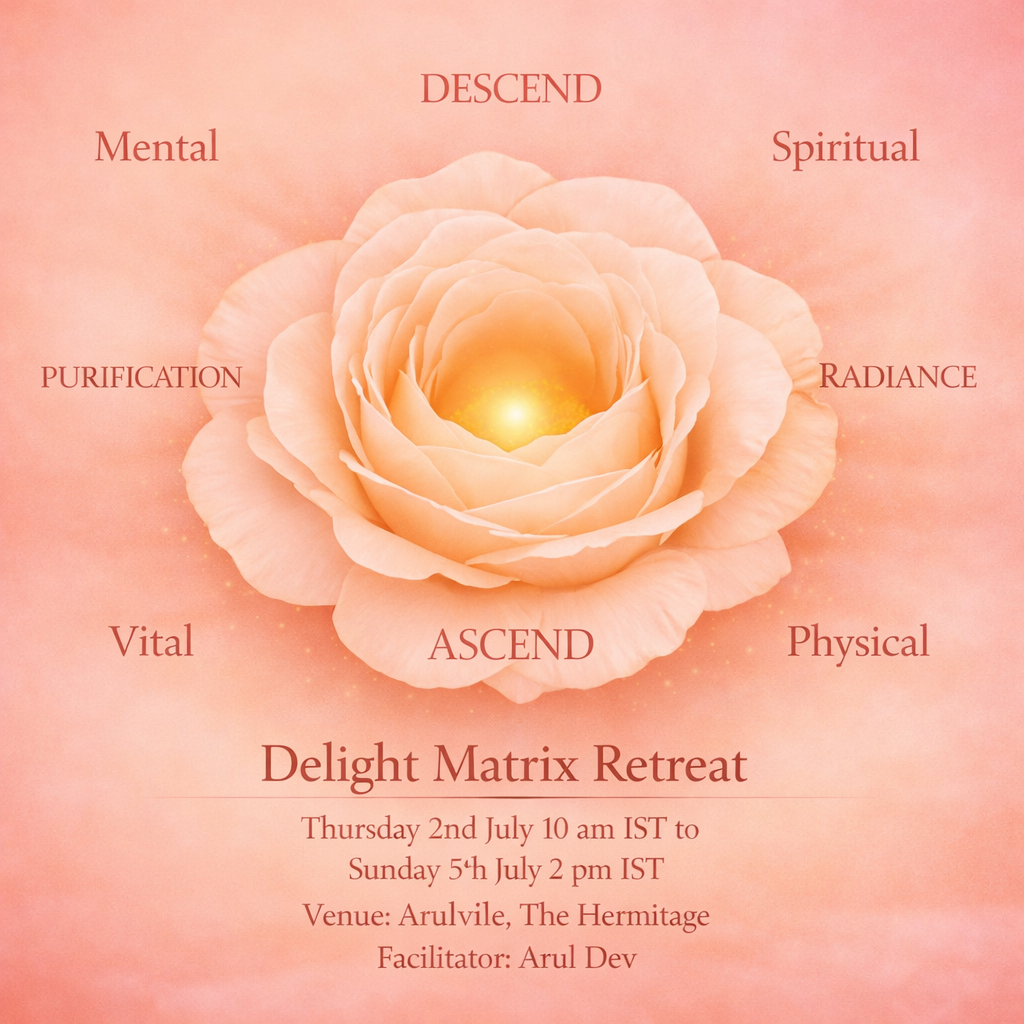
Session 4 – Purification to Radiance Summary – 8th February 2026
SUMMARY NOTES
Deep Body Work: Exploring Interconnectedness and Divine Presence
This session explores a deeper approach to body work that can be integrated with any existing physical, emotional, or spiritual practice. The fundamental premise is that the body is not a collection of isolated parts but a web of interconnected points where sensations and emotions radiate across the entire system.
The Experiential Understanding of Interconnectedness
To understand how to work with the body, one must first recognize that nothing in the body is isolated. For instance, a physical pain in the shoulder may radiate into the chest, the fingers, or a specific point on the palm. Similarly, an emotional blockage, such as a “choked” throat, may trigger sensitivity in the eyes or other parts of the body.
The practice is likened to loosening the soil around a plant. If you wish to uproot a plant with its roots intact, you do not dig aggressively in one spot; instead, you gently loosen the soil on all sides. In the same way, when dealing with a physical or emotional challenge, rather than “banging on” the pain nerve directly, we bring neutral awareness to the surrounding areas and interconnected points to allow the substance to loosen naturally.
The body is viewed as a sacred substance with the highest capacity to hold truth. Seventy percent of this work is not about “solving” problems, but about bowing down to the body and recognizing that its very cells contain “liquefied light” and an inherent affinity for truth.
——————————————————————————–
Guided Inner Practice: Step-by-Step Instructions
This practice should be done with love, care, and a subtle touch, much like the lingering vibration of a gently struck singing bowl.
Step 1: Establishing Contact and Identifying Points
• Close your eyes and contact your body, remembering that this work is a fundamental shift in how you engage with life.
• Select a physical challenge or an emotional/psychological state you wish to work on.
• Identify two or three interconnected points. Do not use logic; instead, observe where the sensation radiates flow across and trigger into other parts of body.
• Sense the “transmission noise” in the body—perhaps a tensing finger, a tight stomach, or a shift in weight. Bow down to this internal intelligence.
Step 2: The Subtle Loosening (10 Minutes)
• Take your awareness to the area of difficulty, but do not poke directly into the problem sensation.
• Move your awareness gently “on the side” of the pain or blockage.
• Plunge your awareness as deep as possible into the substance of the body, then pause.
• In that pause, melt into a receptive, surrendered posture. Like a breath, the “gap” between the movement of awareness is also where the connection occurs.
• Observe how the sensations transmit and shift across the body as things begin to fall into harmony.
Step 3: Visiting the “Quiet Body Parts” (6–7 Minutes)
• Many parts of the body remain dormant or unvisited, causing flow to get stuck.
• Consciously choose to visit “unvisited” parts—the earlobes, the pelvic region, the tongue, or even the buttocks.
• Treat these parts like quiet children in a classroom who have potential but are often missed.
• Again, touch these areas deeply with your awareness and melt into a surrendered posture, waiting for the cell to open.
Step 4: Connecting to the Divine Subtle Body (5 Minutes)
• Allow your entire body to become a melting, receptive vessel.
• Connect your body to a Divine presence in a way that feels direct and intimate.
• You may place your awareness at the feet, heart, or head of a Master (such as The Mother or Sri Aurobindo), or even within a sacred location like a Samadhi, a mountain, or a cave where a Master lived.
• Wait quietly until you feel something concrete and real-time, such as a “light substance” or a “golden body,” which may differ from mental images.
• Place your breath within that presence and allow your body to stay in contact with whatever unfolds.
Step 5: Integration and Closure
• Let go of all effort and simply be with your breath.
• Give yourself a few moments of absolutely “not doing” anything, allowing the Divine to complete the work.
• Carry this state of receptivity into your daily life and relationships
*************
How can I identify interconnected points of pain in my body?
To identify interconnected points of pain or difficulty in your body, you must move beyond logical thinking and instead rely on a deep, sensory understanding of your body’s internal intelligence. You can identify these points through the following process:
• Establish a Quiet Awareness: Begin by closing your eyes and calming yourself. Keep your attention on the overall body rather than focusing solely on the specific area of pain.
• Observe Radiations: When you focus on a physical challenge, such as shoulder pain, notice how that sensation radiates to other areas. You may feel a slight pain in your chest, a sensation in your finger, or a specific point on your palm. The sources note that nothing in the body is isolated; sensations, both good and bad, are transmitted across the entire system.
• Identify “Transmission Noise”: While keeping your awareness on the primary area of difficulty, sense the rest of your body to locate interconnected transmissions. Look for subtle physical triggers or “noise,” such as:
◦ A tensing finger.
◦ A tightening or bracing of the stomach.
◦ An imbalance in how your weight is distributed on one side.
◦ Toes moving into a specific posture.
• Look for Emotional Triggers: If you are working with an emotional blockage, such as a “choked” throat, casually observe what other states are triggered. You might notice the sensation moving to your eyes or other specific parts of your body.
• Practice Neutral Observation: Stay quiet for a couple of minutes, maintaining contact with the primary part you are observing while remaining aware of all other parts of the body. Avoid using logic to figure out where the connection “should” be; instead, wait and see what actually presents itself in real-time.
Identifying these interconnected points is the first step toward a true transformation, as you cannot fully resolve a difficulty in one part of the body without addressing the points it is connected to.
***
How can I visit unvisited body parts to release dormancy?
To visit unvisited body parts and release dormancy, you should treat these areas like “quieter children” in a classroom who have potential but are often overlooked because other, louder parts (like areas of pain) demand all the attention.
You can engage in this practice through the following steps:
• Consciously Choose “Unvisited” Areas: Identify parts of your body that you rarely think about or feel. Examples provided in the sources include your earlobes, the pelvic region, the tongue, or even your buttocks.
• Establish Deep Sensory Contact: Take your awareness to one of these chosen areas and plunge it as deep as possible into the substance of those cells. Instead of just thinking about the body part, you must “sensorially become present to what is there”.
• Adopt a Surrendered Posture: Once you have touched the area with your awareness, immediately move into a “melting surrendered posture”. Do not try to “do” anything or force a change; simply wait quietly in that receptive state.
• Maintain a Gentle Rhythm: Move intuitively from one unvisited part to another, spending a few minutes at each location. You can give dedicated blocks of time, such as six or seven minutes, specifically for these quieter regions.
The goal of this practice is to restore flow where it has become stuck or dormant. We explain that because the body is an interconnected circuit, opening up even one unvisited cell allows a “higher” influence to immediately flow through and affect other parts of the system
***
What does it mean to connect to a Master’s subtle body?
Connecting to a Master’s subtle body is a direct and intimate practice of linking your entire physical being to a divine presence. Rather than relying on memory or mental images, it is an experiential contact with a “light substance” or “golden body” that exists in a real-time, inner dimension.
Key aspects of this connection include:
• Direct Physical Focus: You can establish this connection by placing your awareness at specific points of the Master’s presence, such as their feet, heart, or head. The goal is to feel the actual “inner dimension of their body substance”.
• Connecting Through Sacred Spaces: The connection can also be facilitated by placing your awareness within a Samadhi, a mountain, or a cave where a Master lived. Because the Master’s consciousness has permeated these locations, staying quiet in these spaces allows you to experience something “concrete” that connects back to your own body.
• Real-Time Sensing vs. Mental Imagery: The subtle body often appears different from photos or traditional images because you are sensing it in “current time” as it moves through various realms. You may experience it as a “tiny flash,” a “light body,” or a “light substance”.
• A Receptive Exchange: Once the connection is made, you turn your body into a “melting receptive posture” and may even place your breath within that presence. This allows your body to stay in contact with whatever is unfolding within the divine master, letting the “higher” influence flow through your own cells.
Ultimately, this practice is about bowing down to the body as a sacred substance that has the capacity to hold this “liquefied light” and truth
**
What does it mean for body substance to be liquefied light?
In the context of this practice, the term “liquefied light” refers to the Divine presence manifesting as physical matter within the very substance of the body.
This concept carries several deep implications for how one views and works with the body:
• The Divine as Matter: Liquefied light is described as the Divine existing in the form of matter. It is a sacred element that is present within the body’s cells, even if it remains hidden from ordinary conscious awareness.
• Capacity for Truth: Because the body contains this liquefied light, it is considered to have the highest capacity to hold truth. We emphasize that the physical substance of the body—distinct from one’s personal history or psychological baggage—has a natural affinity for truth.
• Basis for Reverence: Recognizing the body as liquefied light is the reason why practitioners are encouraged to “bow down” to the body substance. It shifts the focus from “solving” physical problems to honoring the sacred intelligence and “light” already present within the cells.
• Experiencing the Light Substance: During the guided practice of connecting to a Master’s subtle body, this liquefied light may be experienced concretely as a “light substance,” a “light body,” or something “golden”. These experiences are described as real-time sensory contacts with a higher dimension of body substance that can be felt as a “tiny flash” or a tangible presence.
By holding the reminder that the body is liquefied light, the practitioner approaches body work not as a mechanical exercise, but as a fundamental shift toward contacting the highest truth residing within their own physical form
**
How can opening one cell influence the entire body’s circuit?
In this practice, the body is viewed as a single, interconnected circuit where nothing exists in isolation. Opening even one cell can influence the entire body’s circuit because of how sensations and influences are transmitted through the system:
• Continuous Radiation of Sensations: The body naturally radiates every experience—whether “good or bad”—across the entire system. When a sensation occurs at a specific point, it is transmitted to the spine and from there to every other part of the body, including the fingertips and toes.
• The Weight of “Higher” Influence: Within this interconnected circuit, if a single cell or part is opened up to a “higher” influence (through neutral awareness or connecting to the Divine), that influence carries more weight than “lower,” denser states. The sources state that this higher influence will “influence immediately” the rest of the circuit.
• Resolving Dormancy: Because the body is a circuit, flow can become stuck if certain parts remain “dormant” or unvisited. By visiting a single “unvisited” cell—such as in the earlobes, tongue, or pelvic region—and allowing it to open, you can achieve a flow or transformation that you might have been unable to trigger by focusing only on the primary area of pain or difficulty.
• The Formula of Harmony: The body is in a constant attempt to reach a state of harmony where each part sinks into alignment with every other part. By touching one interconnected point with subtle, neutral awareness, you “loosen the soil” of the body substance, allowing things to fall into sync and uplift the body as a whole.
In essence, because everything is connected everywhere, the opening of a single cell acts as an entry point for a higher state of being to permeate the entire physical structure
**
What is the difference between personal body history and body substance?
The difference between personal body history and body substance lies in whether you are focusing on the accumulated experiences and problems of the body or its inherent, sacred essence.
Personal Body History
Personal body history refers to the “sediments” and memories that the body has absorbed over time. This includes:
• Physical Challenges: Issues like shoulder pain resulting from bad posture or other past physical strains.
• Psychological Imprints: Emotions, “inner chokeness,” or psychological blockages that the body has absorbed and holds onto as “memories”.
• Problem-Solving Focus: Working with personal history involves trying to “heal” or “solve” specific pains and difficulties. We suggest that focusing on these aspects represents only about 30% of the deeper body work.
Body Substance
Body substance is the fundamental, sacred material of the body that exists independently of its history or problems. Key characteristics include:
• Affinity for Truth: Unlike the personal history, which may be full of distortions or pain, the very substance of the body has a natural affinity for truth and the highest capacity to hold it.
• Liquefied Light: The substance of the body is described as “Divine as matter” or “liquefied light” that is often hidden from our ordinary conscious awareness.
• Object of Reverence: This aspect of the body is what the practitioner “bows down” to. Engaging with the body substance represents 70% of the practice, shifting the focus from fixing problems to contacting a sacred reality.
In essence, while personal history is about what has happened to your body (its pains and memories), body substance is what your body is at its core—a sacred vessel of light and truth.
**
What are the benefits of placing breath within the presence?
Placing your breath within the presence is a deepening step in the practice of connecting to a Master’s subtle body or a sacred space. the benefits of this specific action include:
• Maintaining Divine Contact: It allows your body to stay in contact with whatever is unfolding within the Divine master, Samadhi, mountain, or cave.
• Facilitating Natural Opening and Closing: It supports a “natural and beautiful” process where some parts of your body may open and others may close as they respond to the higher influence.
• Transitioning to “Not Doing”: Placing your breath in the presence helps you let go of all personal effort. This shift allows you to enter a state of “absolutely not doing anything,” creating the space for the Divine to complete the work within your body substance.
• Deepening Receptivity: By placing the breath within that presence, your entire body can more easily maintain a “melting receptive posture,” which is essential for receiving the higher influence that carries more weight than “lower” or denser states,.
This act of placing the breath is described as an intimate way to stay in touch with the “current time” reality of the subtle body, which may be experienced as a light substance or something golden
**
How can I tell if my breath is successfully placed?
You can tell if your breath is successfully placed within a Divine presence or subtle body by observing specific concrete, real-time indicators in your physical and sensory experience. A successful connection is marked by the following:
• A Shift from Memory to Real-Time Experience: You will know the connection is successful if it feels “concrete” and happens in “real time,” rather than being a mere mental memory of a Master or a place.
• Sensory Recognition of “Light Substance”: With grace, you may notice a “tiny flash” or a “light substance” that appears as a “light body” or something “golden”. This experience often differs from traditional mental images because you are sensing the subtle body in its “current time” reality.
• Natural Physical Responses: When you are in contact with what is unfolding within the Divine presence, your body will undergo a “natural and beautiful” process where some parts spontaneously open and others close.
• Feeling the Inner Dimension: You may start to feel the “inner dimension” of the body substance you are connecting to, such as the feet, heart, or head of a Master.
• A State of “Not Doing”: A sign of successful placement is the ability to let go of all personal effort and enter a state of “absolutely not doing anything” so that the Divine can complete the work.
Ultimately, if the connection is truly there, “nothing else is needed for the part of the body”. You simply allow your body to stay in contact with whatever is unfolding within that sacred presence
IT’S BODY’S TURN NOW – To lead our Transformation and Change
Joy to share with you our brochure for our upcoming retreat: It’s Body’s Turn Now. This 3-day immersion is a deep dive into deeper awareness, true flow, subtle bodywork, and conscious transformation — rooted in ancient wisdom and evolving experiential practices.
If you’ve been sensing the call to reconnect with your body’s intelligence, soften into substance, and awaken inner capacities through breath, sound, and surrender… this retreat might be for you. Take a look, feel into it, and reach out if something resonates.
Facilitator : Arul Dev Supporting Facilitators: Shweta Rajurkar & Dr Neela Chandran
3 day residential retreat program 26th to 29th March 2026 Thursday 12:30 pm to Sunday 12:00 pm IST Venue: Arulville, near Chennai – Pondicherry, TN
This shares details the practice session held on 1st February 2026, focusing on the fluidity of inner work and the transition from mental observation to a lived, sensorial experience within the body. This is session 3 of the Purification to Radiance -Deeper body work with the cells held from 18th Jan 2026.
I. The Essence of the Practice: An Experiential Overview
The core of this work is fluidity; while it is presented in steps, the practice is truly beyond fixed sequences. It is designed to be lived in the reality of life, specifically during moments when you are hit by disturbance, sadness, or disappointment. Instead of allowing the body to load these emotions into an illness or low mood, you are encouraged to make a microchoice to engage the inner process.
Key Pointers:
• Beyond “Sitting”: Sitting with eyes closed is just one way; the real “practice” happens in daily life.
• Embracing Difficulty: It is normal to struggle to get “inside” the body. Even for seasoned practitioners, there are days when being inside the body is not possible; the work is to interact with that reality honestly.
• Awareness vs. Mind: The mind’s awareness is often an ineffective observer. The practice requires “local awareness”—a sensorial awareness that exists within the body part itself.
• The Three Pillars: The entire practice rests on Awareness, Surrender, and Connection to the Divine.
——————————————————————————–
II. Detailed Guided Inner Practice
For those seeking to perform these practices, follow these detailed steps. You may find it helpful to read through them first or have them read to you slowly.
1. Centering and the Breath of double surrender
• Physical Touch: Begin by taking your awareness inside your body. Touch the substance of your body—its mass, density, and weight—from the inside.
• Breathwork:
◦ The In-breath: At the end of the in-breath, surrender and cling to the Divine in whatever way resonates with you (e.g., a photograph, or light above the head).
◦ The Out-breath: As the out-breath ends, surrender and dive into your body’s depth as if it is your only refuge. Treat the body substance as a sanctuary.
• Patience: If parts of the body feel “blank” or isolated, wait without hurry. We are participating in a divine experiment, not chasing a goal.
2. Entering the “Cave of the Heart”
• Contact: Place your hand on the center of your chest for concrete support.
• Internal Sensing: Move from surface sensations to the inner regions of the chest. Notice any light, darkness, emotions, or knots without the need to “heal” them; your only agenda is to be present.
• Rotating the Eye of Awareness: If your awareness feels stuck or mechanical, rotate it. Move your “sight” from left to right, above to below, or from surface to depth. This frees the eye of awareness, making it living and fresh.
3. Conversing with the Cells
• The Instruction: Subtly and internally, speak to the cells of your chest.
• The Message: Remind them that it is not their job to store past impressions, emotions, or the energies of others.
• The Transformation: Tell the cells they are being consecrated for a higher goodness. Invite them to be receptive to the light, joy, and love sent directly by the Divine. This process should feel like a widening or melting in the sensorial realm.
4. Widening and Melting (Simulation of Surrender)
• The Posture: Adopt a posture of “I leave it to you, O Divine; I can’t do anything more here”.
• The Technique: Instead of holding onto what is seen in the heart, widen your awareness to connect with infinity or vastness.
• Authentic Surrender: Recognise that we only simulate surrender; true surrender is a tiny, automatic “meltingness” that occurs by the Divine’s hand. We need to be patient and wait for that.
5. Transforming the “Black Heart” into Pure Substance
• Locating the Darkness: Acknowledge the “tiny black heart”—the vibrations of ill will, anger, or broken trust within the substance of the body.
• Breathing into the Dark: Have the courage to breathe into this solidified darkness.
• Finding the Pure Substance: Beneath this darkness lies a pure substance, like the substance beneath the skin of an innocent child, that is suffocating and waiting to be rescued.
• The Bridge: Connect this rescued pure substance to the Divine.
6. Chanting and Sound Vibration
• Subtle Offering: If you use a chant, offer the sound internally to the substance.
• The Manner: Do not impose the sound. Offer it as softly and consciously as if you were feeding the first drop of milk to a newborn child, allowing the cells to slowly absorb the vibration.
7. Closing with Gratitude
• Light: Bow down to the eternal light reflected in the depths of the heart’s substance.
• Thanks: When closing the practice, fully thank your body for the regions it has uncovered and revealed to you.
****
How can rotating the eye of awareness help when I feel stuck?
Rotating the eye of awareness is a specific technique used to overcome the common obstacle of becoming internally “stuck” or mechanical during practice. When your sensorial awareness moves inside the body, it often fixes upon a specific problem, such as a knot of tension or a sensation of pain,.
Here is how rotating this awareness helps you when you feel stuck:
1. Breaking the Cycle of “Consuming” the Problem
When your awareness identifies a problem, it often becomes fixated on it, effectively “consuming” the problem rather than just observing it. This fixation makes the awareness mechanical; you may think you are present, but you are actually “lost somewhere else”. Rotating the eye—shifting your focus from left to right, right to left, or surface to depth—breaks this mechanical loop.
2. Restoring Freedom to Awareness
The primary benefit of rotation is that it frees your awareness. By deliberately moving your internal “sight” in tiny, fine micro-moments (for example, looking at a sensation from above rather than directly at it), you transition from being trapped by a sensation to looking around it. This movement ensures that your awareness remains “free, living, and fresh”.
3. Facilitating the Process of Surrender
Rotation is not an end in itself but a means to reach a state where surrender becomes possible. The entire practice is described as a cycle of Awareness, Surrender, and Connection to the Divine. If your awareness is stuck, you cannot move to the next stage of surrender. By rotating and freeing your awareness, you can look deeper into the substance of the body and adopt the “posture” of surrender, which is necessary for the practice to progress.
4. Enabling New Discovery
The internal landscape often contains “blank” spaces where there is no awareness, or regions “holding stuff”. When you feel stuck, rotating your awareness allows you to play with your “truth radar”. It helps you discover different parts of your centre—such as the chest or the “Cave of the Heart”—that you might otherwise overlook if your focus remained static.
In summary, rotation serves as a practical tool to unlock the internal gaze, moving it from a state of being “stuck” in a problem to a state of fluid, sensorial presence that is ready to engage with the Divine
What are the specific steps for communicating with my heart’s cells?
Communicating with your heart’s cells is a deep, sensorial process that requires moving beyond mental observation into “local awareness”—a state where you sense the body from within the tissue itself.
These are the specific steps for engaging in this internal dialogue:
1. Establishing Physical and Sensorial Contact
• Physical Anchor: Place your hand on the centre of your chest to provide a concrete point of support for your awareness.
• Inward Movement: Move your awareness sensorially inward from the surface where your hand is resting, entering the inner regions of the chest.
• Rotation: If your awareness feels “stuck” or mechanical while trying to connect with the cells, rotate the eye of awareness by shifting your internal focus—left to right or surface to depth—to keep the connection living and fresh.
2. The Manner of Communication
• Internal Dialogue: The communication should not be spoken aloud; it must be conducted internally and subtly.
• Gentle Reminder: You should not use an authoritative force; instead, treat the communication as a “gentle reminder of truth”,.
• Patience: Approach the cells with patience, especially in regions that feel “blank” or isolated, as you are participating in a “divine experiment”.
3. The Content of the Message
• Relieving the Cells of Past Burdens: Explicitly tell the cells that it is not their job to store your own or others’ emotions, impressions, or energies,.
• Challenging the Programming: Remind them that storing these disappointments and failures is merely a “programming of the past” and that the story of the past does not have to be the story of the future.
• Consecration: Inform the cells that they are being consecrated for a higher goodness or a divine creation.
• Inviting Receptivity: Encourage the cells to choose to be receptive to the light, joy, and love being sent directly by the Divine.
4. Deepening the Connection with Sound and Breath
• Vibrational Offering: If you use a chant, offer the sound internally to the substance of the heart. This should be done as consciously and softly as if you were “feeding the first drop of mother’s milk to a newborn child,” allowing the cells to slowly absorb the vibration.
• Rescuing the Pure Substance: Through this communication, aim to reach the “pure substance” that lies beneath any “black heart” or solidified darkness. This pure substance, described as being like the skin and substance of an innocent child, is waiting to be rescued and felt by your breath.
How can I better sense the pure substance in myself?
To better sense the pure substance within yourself, you must move beyond mental observation and engage in a sensorial “divine experiment” that involves navigating through the deeper, often obscured layers of your body. This pure substance is an innocent, child-like layer of your body’s matter that resides beneath the accumulated “trash” of daily life and past impressions.
Below is a detailed guide on how to facilitate this discovery through experiential awareness and specific inner practices.
1. Navigate the Obstacle: The “Tiny Black Heart”
Initially before you can feel the direct descent or ascent of Golden light or substance, you can sense the pure substance, by acknowledging what is covering it. Every person carries a “tiny black heart”—a vibration of ill will, anger, or broken trust embedded physically in the body’s substance.
• Locate the Turmoil: Intuitively identify where this darkness or solidified tension lives, often in the depth of the chest.
• Breathe into the Dark: Rather than avoiding this “blackness,” have the courage to breathe directly into it. When you identify it in the physical substance, you can begin to transform it.
2. Refine Your Awareness
Sensing the pure substance requires a specific type of internal focus called “local awareness”—a sensorial presence that “wants to sense and discover Divine” from within the tissue itself.
• Rotate the Eye of Awareness: If your internal gaze becomes stuck or mechanical, rotate it. Move your focus from left to right, or from the surface to the depth. This frees the eye of awareness so it remains “living and fresh,” allowing you to look around the “knot” of the black heart to see what lies beneath.
• Use the Breath: On the out-breath, surrender and dive into your body’s depth as if it is your only refuge. This helps you “hug” the body’s mass and density, moving your awareness closer to the substance.
3. The Process of “Rescuing” the Substance
The pure substance is described as being like the “skin and flesh of an innocent child” that is currently suffocating under the weight of darkness.
• Descend Inward: Once you have acknowledged the darkness, surrender it to the Divine and descend further into the body.
• Practice Pure Faith: If you cannot yet “see” or “feel” the substance, proceed with pure faith. Breathe into the region with the intention of rescuing this substance that wants to be free and taste communion with the Divine.
• Create a Bridge: Intuitively connect this rescued pure substance to the Divine’s presence—such as the Divine’s feet or light—right there within the substance itself.
4. Utilise Subtle Vibrations
If you use a chant or a specific sound, you can use it to help the pure substance emerge.
• Soft Offering: Offer the sound internally to the substance. It should be as soft and conscious as “feeding the first drop of mother’s milk to a newborn child”.
• Absorption: Do not impose the sound; simply utter it near the substance and allow the cells to slowly absorb the vibration and sink into it.
5. Conclude with Recognition and Gratitude
The pure substance is ultimately a gateway to the eternal light reflected in the depths of the heart and across the body.
• Bowing: Conclude your practice by bowing down to this light within the substance.
• Gratitude: Fully thank your body for the regions it has uncovered. Recognising that this substance “wants to feel your breath” creates a deeper bond between your awareness and your physical reality.
By consistently making the “microchoice” to engage this process during the “reality of life”—especially when hit by failure or disappointment—you prevent these emotions from loading into the body and instead uncover the resilient, pure substance beneath.
This session details a practice session focused on inhabiting the body and exploring the “eye of awareness” to facilitate inner transformation and release.
Below are summary notes to get a grasp of the practices.
The Experiential Essence of the Session
The fundamental premise of this practice is that we rarely truly inhabit our bodies; approximately 98% of the time, our awareness is elsewhere, lost in thoughts, worries, or external observations. We often treat our bodies with a collective imprint of abandonment, a habit inherited from historical spiritual traditions that sought higher consciousness by leaving the body behind. This session invites a shift: viewing the body as a divine instrument that we must learn to operate truly and rightly.
The core of the experience lies in distinguishing between thinking and awareness. While the mind is trained to ask questions and seek answers, awareness is a sensorial “eye” that can move, rotate, and observe without judgment. By consciously rotating the eye of awareness, we can deeply see and feel the width and depth of all parts of our body, thus enabling us to do sadhana within our body. When we have physical or emotional problems, a small portion of our awareness which is trying to fully ‘see’, often gets stuck in those areas, reinforcing the darkness or the problem. By consciously rotating the eye of awareness, we provide an opportunity for that trapped awareness to release and reunite with a fuller state of consciousness.
This process can be done as meditation or even with eyes open. When we notice our awareness is stuck within a certain part or point, we can rotate it, and thus freeing awareness and recovering its capacity to look across the body.
——————————————————————————–
Key Concepts for a High-Level Glance
• Inhabiting the Body: Occupying your physical form rather than observing the world from a distance.
• The Eye of Awareness: A sensorial capacity that has directionality—it can see or sense from above, below, or within in all directions.
• Rotating Awareness: Changing the direction of your inner gaze to reveal hidden dimensions and release “stuck” states.
• The Mouth of Awareness: A micro-gesture of surrender where the “mouth” of your awareness widens to let go of what it has observed.
• Interconnectedness: Recognizing how different parts of the body respond or “cry out” when you focus on a specific area.
——————————————————————————–
The Guided Inner Practice: Step-by-Step
Follow these steps to conduct the inner practice as shared in the session.
Step 1: Inhabiting the Body and Natural Breath
• Begin by watching your natural breath for a minute or two.
• Take your awareness deep within your body. Do not just observe it; inhabit it.
• Relax and isolate thinking: Distinguish between the mind’s questions (e.g., “What am I doing?”) and the actual sensation of being in your body.
• Scan your form: Occupy your chest, back, pelvis, thighs, knees etc.
• Physical Micro-adjustments: Notice any tension. To hold yourself inwardly, slightly draw your toes and fingers inward in a very micro-movement.
Step 2: Selecting and Entering a Part
• Intuitively select a part of the body to work on. This could be a “difficulty zone” or a quieter area that needs attention.
• Drop into the part: Enter the area sensorially. Notice your directionality—are you seeing it from above, the side, or from within-from which direction?
• Free Exploration: Spend a few moments moving around this part. Use your current sensorial capacity, even if it feels like only 1%.
Step 3: Rotating the Eye of Awareness
• Shift your gaze: Intuitively change the direction of your observation. Look from below to above, or around the area, shifting directions.
• Observe Breath locally: Be aware of your breath in your nostrils while simultaneously feeling the part. You may notice pulsations increase or the part “opening up” as the breath moves within it.
• Glimpse the Above: From within that part, turn your awareness to point just above or outside the body (diagonally or vertically) to glimpse an opening beyond the “stuck” state.
Step 4: The Gesture of Surrender
• Widen the Mouth of Awareness: To prevent the awareness from holding onto the “imprint” of pain or darkness it has seen, practice a micro-posture of surrender.
• The Action: Extremely slightly widen the “mouth” of your awareness. This is a subtle movement of letting go, aspiring that what is seen is not held.
• Softening: Soften and melt at the level of the eye of awareness to gain freedom from what has been observed.
Step 5: Connection to the Divine
• Once you have “opened the mouth” in surrender, immediately turn your eye toward the Divine.
• This can be done by calling a name, visualizing an image, sensing a specific presence (like a Samadhi or a sacred space), or simply sensing the space above the body.
• This movement should be brief—even one second is enough to feel the Divine presence from that location.
Step 6: Recognizing Interconnected Points
• While staying focused on your chosen part, connect to the entire body.
• Notice if other points are “crying for attention” through pain or sensation. Alternatively, notice if other parts are releasing tension as you work.
• Travel with your eye of awareness to these interconnected points and repeat the process of minute observation, rotation, and surrender.
Step 7: Completion
• Return to fully occupying your whole body.
• Be with your breath in a quiet, receptive state for 2 to 3 minutes.
• Conclude the practice in your own time, remaining with yourself and the Divine
**************************************
SOME FOCUSSED QUESTIONS AND INSIGHTS
How can I better distinguish between thinking and awareness?
To better distinguish between thinking and awareness, you must learn to isolate the mental activity of the mind from the sensorial act of inhabiting the body. Here is how you can refine this distinction:
1. Recognise the Nature of the Activity
• Thinking is characterised by questions and answers. When you are in your mind, it will constantly pose questions such as “What am I doing?” or “What’s going on?”. If you find yourself answering these internal queries, you are engaged in thought rather than awareness.
• Awareness, by contrast, is an “in-gathering”. It is the act of occupying or inhabiting your physical form—such as your chest, back, pelvis, or thighs—without needing to provide mental commentary.
2. Monitor Physical “Activity Zones”
A key way to distinguish the two is to notice where the “energy” or activity is located in your head:
• Mental Observation: If your temple region or forehead becomes active or strained, it is a sign that you are trying to observe the body “from the mind”. This is an externalised, mental approach that “will not work” for deep inner practice.
• The Eye of Awareness: True awareness is a sensorial extension. It is a “sensorial eye” that exists within the part of the body you are focusing on, rather than looking down at it from the head. It is similar to the feeling of a hand placed on a body part; it is a felt sense rather than a thought process.
3. Identify Directionality
• Thinking is often a flat observation from a distance. However, the eye of awareness has directionality.
• To move from thinking into awareness, notice the specific direction from which you are sensing a body part—are you seeing it from above, below, or from the side?. By consciously rotating this gaze (looking from below to above, or around the area in multi directions), you engage the sensorial capacity of awareness and move away from the static nature of the thinking mind.
4. Practice Neutrality and Occupancy
• The mind often worries about the past or future, for example thinking that we are “not inhabiting our body” 98% of the time.
• Awareness is developed through the “hobby” of watching the natural breath. This builds neutrality, allowing you to simply “be” within the body as a divine instrument. While the mind might judge a sensation as a “problem,” awareness simply observes the “truth and the falsehood” of the sensation in a neutral, sensorial way.
In summary, if you are asking questions or feel tension in your forehead, you are thinking. If you are sensorially “parked” within a body part, feeling its pulsations, and able to rotate your internal gaze, you are in a state of awareness
**
What does widening the mouth of awareness feel like?
Widening the mouth of awareness is an extremely subtle, micro-gesture of surrender performed at the level of your internal observation. Here is a detailed description of how this feels and how to perform it:
The Experiential Feeling of the Gesture
• A Sense of “Letting Go”: It feels like a conscious release of the “imprint” or memory of whatever the eye of awareness has just observed. If your awareness has been looking at a “stuck state” or a region of pain, widening the mouth feels like dropping the weight of that observation so you do not carry it with you.
• Softening and Melting: On a sensorial level, this practice is described as a state of melting and softening right at the point of observation. Instead of the awareness being a hard or fixed “looker,” it becomes a receptive, open space.
• Creating “Internal Space”: It is a “micro micro micro” movement that feels like an opening or a widening of the internal gaze or felt sense. This action provides a sense of freedom from the “truth or falsehood” of the sensations you have just investigated.
The Purpose: Why We “Widen the Mouth”
• Preventing Feedback Loops: When awareness observes a problem (physical or emotional), it can unconsciously “take that imprint” and feed it back to you, reinforcing the darkness or the problem. Widening the mouth ensures the awareness remains pure and does not “remember” or hold onto the difficulty.
• Preparation for the Divine: By “opening the mouth” and surrendering what was seen, you create the necessary detachment to immediately turn your eye toward the Divine or the space above the body without being weighed down by the “stuck” state.
How to Perform the Practice
1. Observe Minutely: First, use your “eye of awareness” to look into a body part from different directions.
2. Apply the Micro-gesture: A few seconds after observing, intentionally widen the “mouth” of your awareness slightly.
3. Hold the Aspiration: As you do this, maintain a quiet aspiration that “what is seen is not held” or “what is felt is not held”.
4. Transition: Once you feel that internal softening or “letting go,” use that same open gesture to connect to a higher presence or the Divine.
In summary, widening the mouth of awareness feels like breaking the grip of your own observation, moving from a state of “seeing a problem” to a state of neutral, surrendered openness
**
How does rotating the eye help release trapped memories?
Rotating the “eye of awareness” helps release trapped memories by breaking the unconscious feedback loop that keeps a person stuck in a problem state. When a physical or emotional problem—or a trapped memory—exists in the body, a small portion of your awareness becomes stuck in that location. This fragmented awareness continuously “sees” the darkness or the problem, reinforcing its existence and preventing transformation.
The process of rotation facilitates release through several key mechanisms:
1. Breaking the Feedback Loop
The eye of awareness naturally has directionality; you might typically observe a body part only from above, the side, or from within. By consciously rotating this gaze—looking from below to above or around the area—you provide the “stuck” awareness an opportunity to release and reunite with your fuller awareness. This shift in perspective prevents the awareness from simply reinforcing the old imprint of the memory.
2. Revealing New Dimensions
Rotating the eye allows the “sensorial eye” to reveal different details and dimensions that were previously unseen. This helps you observe the “truth and the falsehood” of the trapped state. Shifting the directionality can reveal that while a part may feel “stuck,” there are points where the breath is fine or where the part can “open up”.
3. Glimpsing an “Opening”
From within a stuck state, you can orient your awareness to point just above or outside the body. This diagonal or vertical “glimpse” helps the awareness see an opening beyond the trapped memory, facilitating a shift away from the stagnant energy.
4. Purification and Reunification
We can describe the eye of awareness as the inner flame (Agni), which possesses the capacity for purification and transformation. By moving this “flame” through different directions, you enable it to act in its normal, free way rather than being confined to the memory.
5. Preventing the “Imprint” from Re-forming
To ensure the memory does not re-trap the awareness, the practice suggests a micro-gesture of surrender after rotation. By “widening the mouth of awareness,” you aspire not to hold onto the imprint of what was just seen, effectively dropping the memory so it is not fed back into your system. This softening and melting at the level of the eye grants you freedom from what has been observed
_ Thank you. Completed notes – Below is earlier notes and articles.
Orientation: Entering the Dimension of Matter (Substance)
Date: Sunday, 18th January 2026 | Session 1 | Facilitator : Arul Dev
The core quest of this practice is to shift from a life spent thinking, emoting, and feeling to one lived within the body. While our awareness is typically “thrown out” into the world, this work invites an in-drawing of awareness to discover the body’s density and substance. The body is not merely a physical vessel; it has an absorptive capacity and contains the “memories of evolution”—from the Big Bang and minerals to plants and the remembrance of a future body.
Key Concepts for the Practitioner:
• Active Surrender: This is not a passive state but a way of “guarding the body” while connecting its substance to higher qualities like joy, vastness, or light.
• Aspiration (Agni): Success in this practice does not depend on perfect concentration or purity alone, but on the inner urge of the body to stay linked to its Source.
• The Goal-less Posture: Approaching the body with a specific agenda (e.g., “I must be healed”) can contaminate the process. The focus should be on discovering the truth of the body rather than achieving a result.
——————————————————————————–
Guided Inner Practice
This practice is organic. While these steps provide a framework, you should eventually follow the movements that start happening naturally within your own body.
Step 1: Establishing Physical Contact and Awareness
1. Close your eyes and touch your body with your awareness. Treat the body as “the Lord” to discover the divinity within it.
2. Use your fingers for assistance. Place your hand on different parts of the skin. Direct your entire concentration to the finger, using its mild pressure to help your awareness enter the body.
3. Feel the substance. Move beyond the surface skin to feel the density and pulsation of the matter inside.
4. Adopt a posture of surrender. Internally, find the feeling of “melting” or “vulnerability” that occurs when you feel true love or union with the divine.
Step 2: Unifying the Will and Dropping Agendas
1. Recognise the “Hurry”: Most practitioners feel a natural urgency for pain to leave or for a part to heal. Consciously drop this agenda.
2. Simplify your intent: Replace all goals with a single will: “I want to go deeper into the body to see its truth”.
3. Manage “Blankness”: If you get lost or your mind wanders, cut the practice and start again. It is better to do thirty seconds of correct awareness than ten minutes of sitting blankly.
Step 3: Navigating the Inner Terrain
1. Enter the “Entanglements”: You may encounter darkness, rigidity, or specific images (e.g., a flower, a rusted plate, or a person’s face). These are representations of your inner reality.
2. Occupy the sensation: Do not try to make the sensation go away. Instead, enter into the substance of that image, pain, or rigidity.
3. Spread your awareness: Occupy the area with your awareness, spreading through the “entanglement.” By coming into harmony with these parts rather than avoiding them, they lose their power to affect you negatively. Here harmony means each one is in its right place around a conscious higher center of reference.
Step 4: Integration through Breath and Descent
1. Unite with the natural breath: Without changing your breathing, follow its movement through the body.
2. Stir the matter: Focus on the tiny breath movements or pulsations under your hands.
Occupying these regions allows the body to open up and facilitates a natural descent into the deeper layers of being.
——————————————————————————–
Summary for High-Level Glance
• The Objective: To live from within the physical substance of the body rather than the mind alone.
• The Primary Tool:Aspiration (Agni)—the deep-seated urge to connect the body to its Source.
• The Method:
◦ Touch: Use physical touch to anchor awareness within body.
◦ Surrender: Maintain an active state of “offering” the body’s cells to the higher consciousness.
◦ Observation: Allow sensations to open up. Sense within. You will see, feel something. Whatever rigidities or images open up, let your awareness be present within them with the aspiration to understand their nature rather than to fix them.
• The Practice Philosophy: Quality over duration. If awareness breaks, reset and begin the contact again. Finish by resting to allow the process to complete